Pushkar Camel Fair 2026: Dates, History, Events and Travel Guide
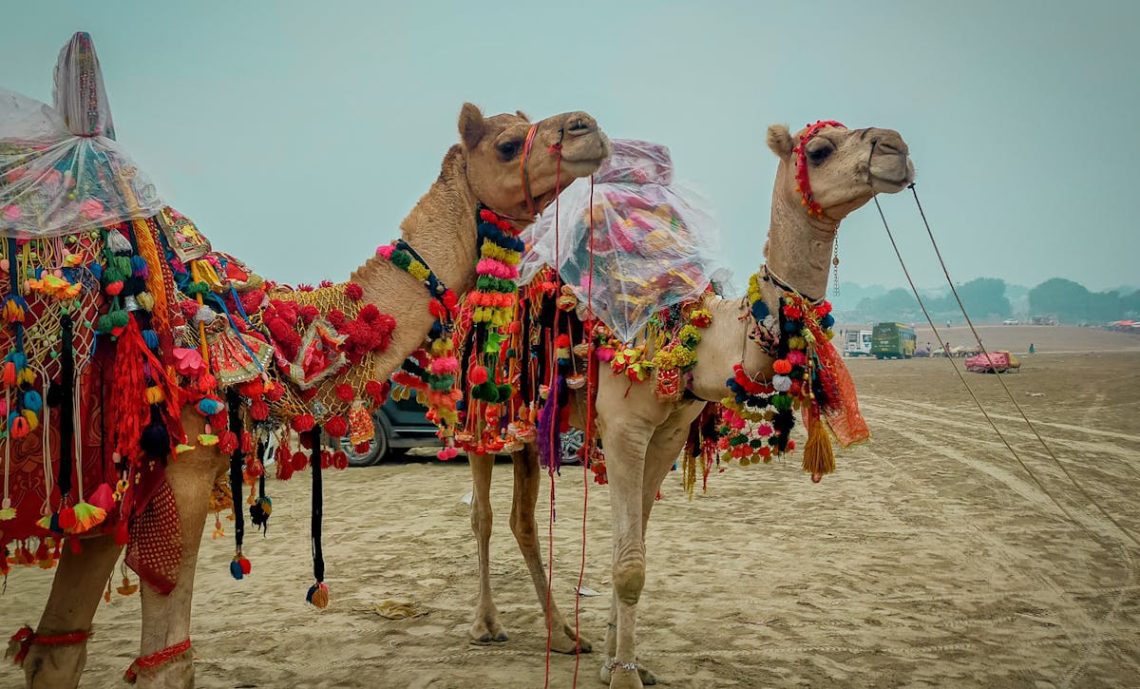
Every November, the quiet town of Pushkar in Rajasthan transforms into a lively gathering of camel herders, traders, pilgrims, performers and travellers. Hundreds of decorated camels, traditional music, colourful turbans and bustling livestock markets turn the desert landscape into one of India’s most recognisable cultural spectacles.
Known as the Pushkar Camel Fair or Pushkar Mela, this annual event brings together two very different experiences. On one side is a traditional livestock fair where herders gather to buy, sell and showcase camels, horses and cattle. On the other is a major cultural and tourism event featuring folk performances, competitions, local crafts and religious celebrations.
The fair is also closely connected to Pushkar’s religious significance. As Kartik Purnima approaches, pilgrims visit the sacred Pushkar Lake to take a holy dip and offer prayers.
If you are planning a visit, here is your complete guide to Pushkar Camel Fair 2026, including its dates, history, events, religious significance and practical travel information.
Pushkar Camel Fair 2026: Dates and Location
The Pushkar Camel Fair 2026 will take place from November 17 to November 24, 2026, in Pushkar, a pilgrimage town in Rajasthan’s Ajmer district.
The main fairground is the Pushkar Mela Ground, located near the town’s desert outskirts. Religious activities take place around Pushkar Lake and its surrounding ghats, particularly on Kartik Purnima, which falls on November 24, 2026.
While the formal cultural programme runs for eight days, livestock and camel traders may begin arriving before the official opening. This means visitors interested in seeing the traditional trading activity should consider reaching Pushkar early.
Pushkar Camel Fair 2026 at a glance
- Dates: November 17–24, 2026
- Location: Pushkar, Ajmer district, Rajasthan
- Main venue: Pushkar Mela Ground
- Religious highlight: Kartik Purnima on November 24
- Major attractions: Camel trading, livestock displays, competitions, folk performances and religious rituals
- Entry: The general fairground and public cultural programme are listed as free to enter; separately organised activities may charge a fee.
Pushkar Camel Fair 2026: Dates and Events Schedule
The fair combines livestock activities, cultural competitions, performances and religious celebrations. The following table gives visitors a day-by-day overview of the currently published 2026 programme.
| Date | Event Highlights | What to Expect |
|---|---|---|
| November 17, Tuesday | Opening ceremony and flag hoisting | Traditional music, opening celebrations, livestock activity and evening Maha Aarti |
| November 18, Wednesday | Camel decoration and camel dance | Decorated camels, traditional games and cultural performances |
| November 19, Thursday | Horse dance and rural sports | Kabaddi, horse performances and village games |
| November 20, Friday | Spiritual walk and food and craft festival | Procession, local food, handicrafts and folk performances |
| November 21, Saturday | Turban and moustache competitions | Traditional Rajasthani contests, rural sports and cultural shows |
| November 22, Sunday | Matka race and musical chairs | Women’s competitions, music and evening performances |
| November 23, Monday | Lagaan-style cricket and camel/horse shows | Sporting activities, livestock displays and cultural events |
| November 24, Tuesday | Kartik Purnima and holy dip | Pilgrims gather at Pushkar Lake for the sacred bath, prayers and closing celebrations |
Note: Individual event timings and performers can change. Check the latest programme issued by Rajasthan Tourism or the Ajmer district administration before travelling.
History of the Pushkar Camel Fair
The Pushkar Fair has a history spanning more than a century. Its origins are closely associated with the religious importance of Pushkar and the annual Kartik Purnima pilgrimage.
For generations, traders and livestock owners from Rajasthan and neighbouring regions have gathered around this period to buy and sell animals. The timing was practical as well as religious: the large gathering of pilgrims created an opportunity for rural communities to trade livestock, exchange goods and meet other traders.
Camels were particularly important to life in Rajasthan’s arid regions. They were used for transportation, agricultural work and carrying goods across desert terrain. Horses and cattle were also important to rural livelihoods.
Over time, the traditional livestock gathering developed into a larger fair. Cultural activities, animal competitions, local crafts and entertainment became part of the experience.
Tourism has since transformed the fair into an internationally recognised event. Photographers, travel writers and visitors from across India and overseas now arrive to experience its colours, performances and desert atmosphere.
However, the traditional livestock market remains an important part of the fair’s identity. It is worth remembering that the event is not simply a tourist carnival: it is also a working gathering for herders and traders whose livelihoods are connected to animal husbandry.
Camels, Horses and Livestock Traditions at Pushkar Mela
The sight of camels gathered across the sandy fairground is one of the biggest reasons the Pushkar Mela attracts visitors.
Camel owners travel from different parts of Rajasthan with animals that may be intended for sale, breeding, work or display. Horses and cattle are also brought to the fair, making it an important meeting point for livestock traders.
1. Camel Trading and Livestock Markets
The traditional livestock market is where the fair’s rural character is most visible. Owners and prospective buyers inspect animals, discuss prices and negotiate deals.
A camel’s health, age, build and working ability can influence its value. The fair also provides an opportunity for traders to meet other livestock owners and exchange knowledge.
The trading areas are especially active in the early part of the fair. Visitors hoping to see this side of Pushkar should arrive early in the morning and allow time to explore the livestock grounds.
2. Decorated Camels
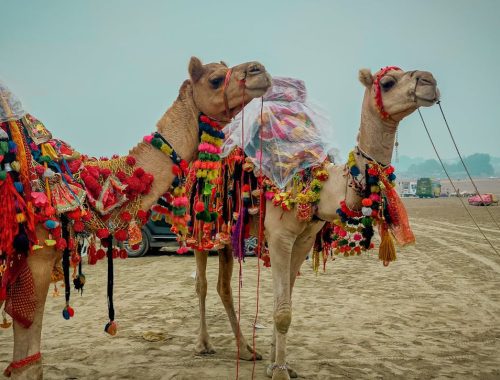
Camels are often groomed and decorated with colourful accessories, patterned textiles, ornaments and traditional designs.
Some owners spend considerable time preparing their animals for display and competitions. The camel decoration events offer visitors an opportunity to see the craftsmanship and cultural traditions associated with Rajasthan’s camel-owning communities.
3. Camel and Horse Competitions
The cultural programme includes activities that showcase the animals’ appearance, movement and training.
Camel dance and decoration competitions are among the popular attractions. Horse performances also draw crowds, reflecting the importance of equestrian traditions in Rajasthan.
These events add an entertainment element to the traditional livestock gathering, although their schedules and formats can vary from year to year.
Major Attractions and Events at Pushkar Camel Fair
Beyond livestock trading, the Pushkar Fair has developed into a cultural celebration with activities for different kinds of visitors.
Here are some experiences to look out for in 2026.
1. Camel Decoration and Dance Competitions
Decorated camels are among the most photographed sights at the fair. Their colourful accessories, traditional ornaments and carefully prepared appearances make the competitions a major attraction.
Camel dance performances also showcase the animals’ training and the relationship between their owners and handlers.
2. Moustache and Turban Competitions
Rajasthan’s traditional moustaches and colourful turbans are an important part of its cultural identity. The fair celebrates these traditions through competitions that attract participants and spectators.
The moustache contest is particularly popular with photographers, while turban-tying events give visitors a glimpse of regional styles and techniques.
3. Rural Sports and Traditional Games
The programme includes traditional games and sporting activities such as kabaddi, tug-of-war, musical chairs and matka races.
These events bring a village-fair atmosphere to the larger festival. Some competitions involve local residents, while others encourage visitors to participate.
4. Folk Music and Dance Performances
The evenings at Pushkar offer a different experience from the busy livestock grounds. Cultural stages host folk music, dance and performances by regional artists.
Visitors may encounter traditional Rajasthani dance forms, folk instruments and performances that reflect the state’s cultural heritage.
5. Food and Craft Festival
The food and craft festival at Shilpgram is another attraction to explore during the fair.
Visitors can browse traditional handicrafts, textiles, decorative items and locally made products. Food stalls offer an opportunity to sample Rajasthani flavours and regional specialities.
6. Hot-Air Ballooning and Desert Experiences
Hot-air balloon rides and other adventure activities have become part of the modern tourism experience around Pushkar.
Depending on availability, visitors may also find camel safaris, desert excursions and photography experiences.
These activities are generally organised separately from the traditional livestock market and may involve additional charges. Check the operator, safety arrangements and weather conditions before booking.
Religious Significance: Pushkar Lake, Kartik Purnima and Brahma Temple
The Pushkar Camel Fair is not only a livestock and cultural event. Its timing is closely connected to one of the most important pilgrimage periods in the Hindu calendar.
Pushkar Lake: The Sacred Centre of the Fair
Pushkar Lake, also known as Pushkar Sarovar, holds a special place in Hindu religious traditions. Surrounded by bathing ghats and temples, it is considered one of Rajasthan’s most sacred lakes.
According to Hindu mythology, the lake was formed when a lotus flower fell from the hands of Lord Brahma. The lake is associated with pilgrimage, prayer and ritual bathing.
During Kartik Purnima, thousands of devotees visit the ghats to take a holy dip. Many believe that bathing in the sacred water during this period brings spiritual merit and helps cleanse past sins.
The lake’s religious significance is one of the main reasons the fair attracts pilgrims alongside tourists and livestock traders.
Brahma Temple: A Major Pilgrimage Destination
Pushkar is also famous for the Jagatpita Brahma Temple, dedicated to Lord Brahma, the Hindu god of creation.
The temple stands close to Pushkar Lake and is among the town’s most important religious landmarks. The current structure dates to the 14th century, although the site is associated with much older traditions.
According to local legend, Lord Brahma chose Pushkar as the place to perform a yajna. The temple is an important destination for pilgrims who visit Pushkar during Kartik Purnima.
Many devotees take a ritual bath in Pushkar Lake before visiting the Brahma Temple to offer prayers.
Kartik Purnima: The Religious Highlight of 2026
Kartik Purnima, which falls on November 24 in 2026, marks the full-moon day and the religious high point of the fair.
Pilgrims gather at the lake before sunrise for ritual bathing and prayers. The ghats become especially busy, and the town takes on a devotional atmosphere.
Visitors interested in experiencing this part of the festival should plan ahead. The crowds can be significantly larger around the full-moon observance than during the earlier livestock-trading days.
How to Reach Pushkar for the Camel Fair
Pushkar is located in Rajasthan’s Ajmer district and is well connected by road to nearby cities. The most convenient route for many visitors is to reach Ajmer first and continue to Pushkar by road.
By Train
Ajmer Junction is the nearest major railway station, approximately 14–17 km from Pushkar, depending on the route and starting point.
Ajmer is connected to cities including Delhi, Jaipur, Mumbai and Ahmedabad. From the railway station, visitors can hire a taxi, take an auto-rickshaw or use a local bus to reach Pushkar.
During the fair, book train tickets early and allow extra time for road transfers because traffic can increase around the town.
By Air
Jaipur International Airport is the main airport option for visitors flying into the region. It is approximately 145 km from Pushkar by road.
Kishangarh Airport, closer to Ajmer, may also be an option depending on available flight connections. Check current flight schedules before choosing your route.
From either airport, visitors can continue to Pushkar by taxi or other road transport.
By Road
Pushkar is accessible by road from Ajmer and Jaipur.
- Ajmer to Pushkar: Approximately 15 km
- Jaipur to Pushkar: Approximately 145 km
- Delhi to Pushkar: Approximately 400 km, depending on the route
State-run and private buses connect nearby cities with Ajmer and Pushkar. Taxis and private vehicles are also available.
If you are travelling during the fair, expect heavier traffic near the Mela Ground and the town centre. Follow local parking and traffic instructions rather than driving directly into crowded areas.
Where to Stay During Pushkar Camel Fair 2026
Accommodation in Pushkar becomes especially busy during the fair. Hotels, guesthouses and desert camps can fill up well before November, so booking early is strongly recommended.
The best area to stay depends on whether you want to be close to the religious sites, the cultural events or the livestock grounds.
1. Near Pushkar Lake and the Old Town
Staying around Pushkar Lake gives visitors easy access to the ghats, Brahma Temple, local markets and rooftop cafés.
This area is ideal for travellers who want to experience the religious and cultural side of Pushkar. However, the narrow lanes can become crowded, and vehicle access may be restricted.
2. Near the Main Bazaar
The main bazaar is a convenient option for visitors who enjoy shopping, local food and being close to the town’s everyday activity.
You will find guesthouses, small hotels, cafés and shops selling textiles, jewellery and handicrafts.
It can be noisy during the fair, so consider the location of your accommodation if you prefer a quieter stay.
3. Around the Mela Ground and Desert Outskirts
Tented camps and larger accommodation properties around the fairground offer a more immersive experience.
These stays can be convenient for visitors interested in camel trading, desert activities and cultural performances. Some camps also organise meals and guided experiences.
Check exactly how far your accommodation is from the lake and the main event areas before booking.
4. Ajmer: An Alternative Base
If Pushkar accommodation is unavailable or too expensive, consider staying in Ajmer.
Ajmer is approximately 15 km away and offers a wider range of accommodation options. You can travel to Pushkar by taxi or bus, although you should allow extra time during peak fair days.
Best Time to Visit Pushkar Camel Fair 2026
The best time to visit depends on what you want to experience.
For camel and livestock trading: Visit during the earlier part of the formal fair, particularly November 17–20. Livestock activity is generally more prominent during this phase, although some traders and animals may arrive earlier.
For cultural competitions and performances: November 18–23 is a good period to explore the organised events, including camel decoration, horse performances, traditional games and folk shows.
For religious celebrations: November 24 is the main date for Kartik Purnima and the holy dip at Pushkar Lake. It is an important day for pilgrims but also one of the busiest.
For photography: Early mornings and late afternoons offer softer light and a chance to see the fairground during its more active hours. Always ask permission before photographing people or their animals.
November generally brings pleasant daytime weather and cooler evenings, but temperatures can drop after sunset. Carry comfortable walking shoes, sun protection and a light jacket.
What Else to See in Pushkar
If you are travelling to Pushkar for the fair, set aside some time to explore the town beyond the Mela Ground.
- Pushkar Lake: Walk around the sacred lake and explore its ghats, temples and evening atmosphere.
- Brahma Temple: Visit one of Pushkar’s most important religious landmarks.
- Savitri Temple: Located on a hill, the temple offers views of Pushkar and the surrounding landscape.
- Pushkar Bazaar: Browse traditional clothing, jewellery, handicrafts, leather goods and souvenirs.
- Shilpgram: Explore local crafts, food stalls and cultural displays during the fair.
- Desert outskirts: Experience the landscape around Pushkar through guided excursions and sunset views.
Visitor Etiquette: How to Experience Pushkar Fair Respectfully
The Pushkar Camel Fair is a working livestock gathering, a religious occasion and a major tourism event. Visitors should be mindful of the local communities, animals and sacred spaces.
A few simple practices can make your visit more respectful:
- Ask before taking photographs: Always seek permission before photographing camel owners, performers, pilgrims or local residents.
- Respect the ghats: Pushkar Lake is a sacred site. Dress modestly, follow local instructions and avoid disturbing people during prayers or ritual bathing.
- Do not photograph bathing pilgrims: Photography may be prohibited or restricted at certain ghats. Follow posted rules and respect people’s privacy.
- Be considerate around animals: Keep a safe distance from camels and horses, especially during competitions and trading. Avoid rides involving animals that appear distressed, injured or poorly cared for.
- Do not enter private camps without permission: Livestock owners and herders use these spaces as temporary homes and workplaces.
- Avoid littering: Carry reusable water bottles and dispose of waste responsibly.
- Agree on prices in advance: Confirm the cost of camel rides, guided tours, photographs and other paid activities before participating.
- Follow local rules: Observe instructions from organisers, police and local authorities, especially around crowded roads and bathing areas.
Respectful travel helps preserve the character of the fair while supporting the people and communities who make it possible.
Frequently Asked Questions About Pushkar Camel Fair 2026
1. When is Pushkar Camel Fair 2026?
Pushkar Camel Fair 2026 will take place from November 17 to November 24 in Pushkar, Rajasthan. The final day coincides with Kartik Purnima, when pilgrims gather at Pushkar Lake for ritual bathing and prayers.
2. Where is the Pushkar Camel Fair held?
The fair takes place in Pushkar, in Rajasthan’s Ajmer district. The main livestock and cultural activities are held at the Pushkar Mela Ground, while religious celebrations take place around Pushkar Lake and its ghats.
3. Why is Pushkar Camel Fair celebrated?
The fair traditionally developed around the Kartik Purnima pilgrimage and the gathering of livestock traders. It provided an opportunity for rural communities to buy and sell camels, horses and cattle while pilgrims visited Pushkar for religious observances.
4. Is Pushkar Camel Fair free to enter?
General entry to the fairground and public cultural programme is listed as free. However, activities such as camel rides, hot-air ballooning, guided tours and certain organised experiences may involve additional charges.
5. What are the main attractions at Pushkar Camel Fair?
Major attractions include camel trading, decorated camel displays, camel dance and horse competitions, moustache and turban contests, traditional games, folk performances, local crafts and the Kartik Purnima celebrations at Pushkar Lake.
6. How many days should I spend at Pushkar Camel Fair?
A two- or three-day visit is a useful starting point for exploring the fair, Pushkar Lake, Brahma Temple and the local markets. Visitors interested in both livestock trading and the Kartik Purnima celebrations may prefer a longer stay.
7. Which railway station is closest to Pushkar?
Ajmer Junction is the nearest major railway station, approximately 14–17 km from Pushkar. Taxis, buses and auto-rickshaws are available for the onward journey.
8. What is the significance of Pushkar Lake during the fair?
Pushkar Lake is a sacred pilgrimage site in Hindu tradition. During Kartik Purnima, devotees visit the lake to take a holy dip and offer prayers. The religious observance is one of the main reasons the annual fair takes place around this period.
9. Is the Pushkar Camel Fair suitable for international tourists?
Yes. The fair attracts domestic and international visitors interested in Rajasthan’s culture, livestock traditions, photography, handicrafts and religious heritage. Visitors should respect local customs, follow ghat rules and ask permission before photographing people.
Experience Rajasthan’s Culture at Pushkar Camel Fair 2026
The Pushkar Camel Fair brings together traditions that have shaped Rajasthan for generations. The livestock market reflects the region’s rural economy, while the cultural competitions and performances showcase its colourful heritage.
At the same time, the pilgrimage to Pushkar Lake and the Brahma Temple gives the fair a deeper religious significance.
Whether you visit to see decorated camels, explore traditional markets, watch folk performances or witness Kartik Purnima prayers, Pushkar offers a distinctive experience of Rajasthan’s cultural and spiritual life.
For the best experience, plan your dates around the activities that interest you, book accommodation in advance and make time to explore the town beyond the fairground.

Khushi Jha
I am Khushi Jha, a proud alumna of Delhi University with a degree in History and Political Science. My fascination with the events that have shaped our world drives me every day. Currently, I am pursuing my Master’s in History, diving even deeper into global dynamics and the incredible heritage of India. I firmly believe that India's rich heritage deserves wider recognition. I strive to bring its stories to the forefront, ensuring they are celebrated and acknowledged on a global stage. I have written extensively across various niches, including fashion, health, lifestyle, real estate, hospitality, amongst others. In my free time, you’ll find me immersed in books, both fiction and non-fiction, or simply enjoying some much-needed rest.

You May Also Like
Goa’s Provisional Figures for 2025 Show Continued Growth in Tourist Arrivals
Pushkar Camel Fair 2025: A Complete Travel Guide (Oct 30 – Nov 5)