Dussehra 2026: Date, History, Traditions and How India Celebrates Vijayadashami
Dussehra, also known as Vijayadashami or Dasara, is one of the most widely celebrated festivals in India. It marks a victory associated with the triumph of good over evil, but the way the festival is observed varies considerably across the country.
In North India, Dussehra is closely associated with the Ramayana and the victory of Lord Rama over Ravana. In parts of eastern India, Vijayadashami marks the conclusion of Durga Puja. In Mysuru, the festival is centred around Goddess Chamundeshwari and a grand royal-era procession. In Kullu, the celebration brings together local deities and communities in a week-long festival. In Bastar, Dussehra follows a very different religious and cultural tradition and does not centre on the burning of Ravana’s effigy.
In 2026, Vijayadashami falls on Tuesday, October 20 in Delhi and much of India. The Dashami tithi begins at 12:50 PM on October 20 and ends at 2:11 PM on October 21 according to the New Delhi panchang.
Dussehra 2026: Date and Important Information
| Detail | Information |
|---|---|
| Dussehra 2026 date | Tuesday, October 20, 2026 |
| Also known as | Vijayadashami, Dasara |
| Main significance | Victory of good over evil |
| Associated stories | Rama and Ravana; Durga and Mahishasura |
| Major celebrations | Delhi, Mysuru, Kullu, Bastar, Kolkata and many other regions |
| Dashami tithi begins | October 20, 2026, at 12:50 PM |
| Dashami tithi ends | October 21, 2026, at 2:11 PM |
| Vijay Muhurat in New Delhi | 1:59 PM–2:45 PM |
The exact ritual timings can vary by location, so anyone observing a specific puja should check a local panchang rather than relying on a single national timing.
What is Dussehra?
Dussehra is the popular name used for Vijayadashami in many parts of India. The name is associated with the tenth day of the festival period following Navratri.
The festival has more than one major religious narrative behind it.
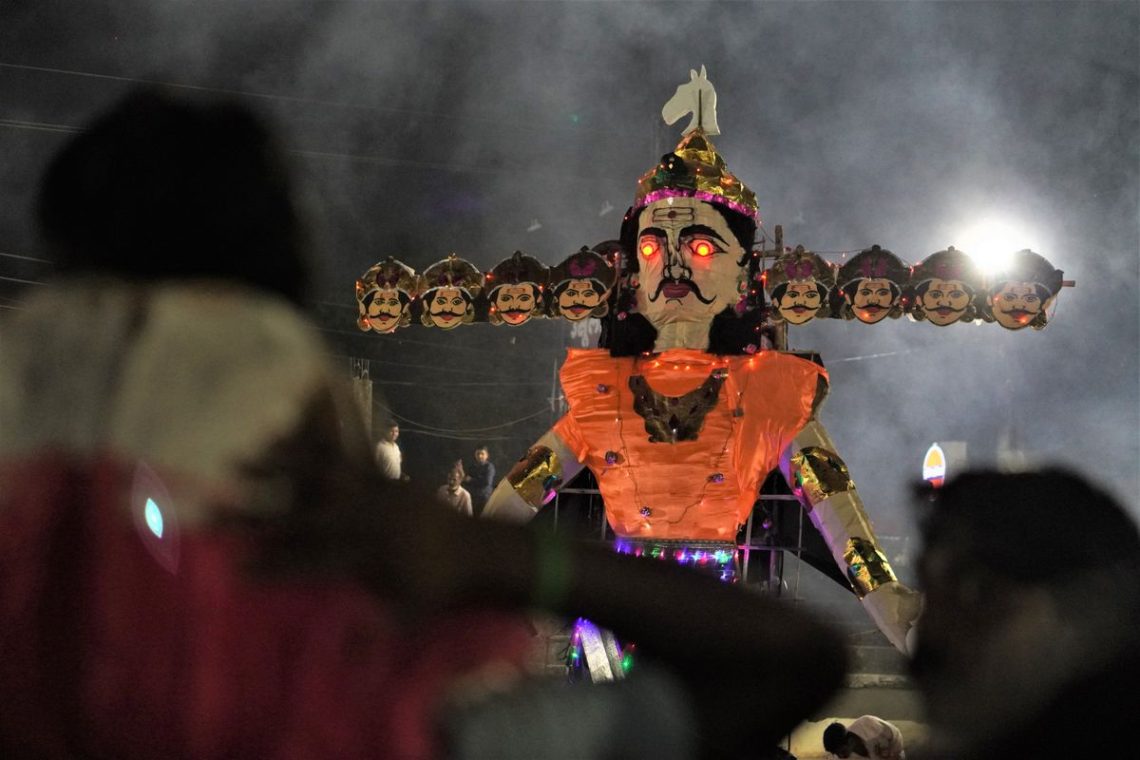
In the Ramayana tradition, Vijayadashami is associated with Lord Rama’s victory over Ravana, the king of Lanka. The story represents the victory of righteousness over wrongdoing, and this is why many communities mark the day by staging Ram Lila performances and burning large effigies of Ravana, often alongside effigies of Kumbhakarna and Meghnad.
In Shakta traditions, the day is connected with Goddess Durga’s victory over Mahishasura. This association is particularly important in eastern India, where Vijayadashami marks the conclusion of Durga Puja.
These traditions coexist across India rather than representing one single form of the festival.
Why is Dussehra Celebrated?
At its broadest level, Dussehra represents the triumph of good over evil.
However, the meaning attached to the festival depends on the region and religious tradition.
In the Ramayana tradition
The focus is on Rama’s victory over Ravana. Ravan Dahan, Ram Lila performances and public celebrations are particularly prominent in North India.
In the Durga tradition
The focus is on Goddess Durga’s victory over Mahishasura. In West Bengal and several other eastern regions, Vijayadashami marks the final day of Durga Puja, when idols of Durga are taken for immersion.
In Mysuru
The festival centres on Goddess Chamundeshwari, who is associated with the defeat of Mahishasura. Mysuru’s Dasara developed as a major royal celebration and is now one of Karnataka’s best-known cultural festivals. The official Mysuru Dasara site describes it as Karnataka’s state festival and traces the celebration in Mysuru to 1610.
In Bastar
Bastar Dussehra follows a distinctive local religious tradition centred on Maa Danteshwari, local deities and community rituals. It does not follow the usual Rama-Ravana narrative, and Ravana’s effigy is not burned.
Dussehra vs Vijayadashami: Are They the Same?
In everyday usage, Dussehra and Vijayadashami generally refer to the same festival day, although regional names and traditions differ.
The term Vijayadashami refers to the tenth day and its association with victory, while Dussehra is a widely used name for the festival in many parts of India. Dasara is another common regional form of the name, particularly associated with Karnataka and some other regions.
The important point is that the same festival day can carry different stories and customs depending on where it is celebrated.
How Is Dussehra Celebrated Across India?
One of the most interesting things about Dussehra is that there is no single way to celebrate it.
Dussehra celebrations across India
| Place | Main tradition | What makes it different? |
|---|---|---|
| Delhi | Ram Lila and Ravan Dahan | Large public Ram Lila performances and burning of Ravana effigies |
| Mysuru, Karnataka | Mysuru Dasara and Jumboo Savari | Royal heritage, Chamundeshwari worship and grand elephant procession |
| Kullu, Himachal Pradesh | Deity processions and cultural celebrations | Hundreds of local deities and a distinctive Himalayan religious tradition |
| Bastar, Chhattisgarh | Worship of Maa Danteshwari and local traditions | Lasts for weeks; Ravana is not burned |
| Kolkata/West Bengal | Durga Puja and Vijayadashami | Marks the conclusion of Durga Puja and immersion of Durga idols |
| Kota, Rajasthan | Dussehra Fair and Ravan Dahan | Extended fair combining religious celebration, folk culture and entertainment |
| Kurnool region, Andhra Pradesh | Devaraguttu/Banni tradition | A distinctive ritual associated with the local Dussehra celebration |
This regional diversity is one of the reasons Dussehra is better understood as a group of related traditions rather than as one uniform celebration.
Dussehra in Delhi: Ram Lila and Ravan Dahan
In Delhi, Dussehra is strongly associated with Ram Lila, the theatrical retelling of episodes from the Ramayana.
Performances take place over several days leading up to Vijayadashami. On the final day, large effigies representing Ravana and, in many celebrations, Kumbhakarna and Meghnad are burned before large crowds.
Delhi’s Ramlila Grounds are among the locations highlighted by India’s official tourism portal for Dussehra celebrations.
The burning of the effigies is symbolic rather than simply a spectacle. It represents the defeat of wrongdoing and the restoration of righteousness.
Mysuru Dasara 2026
Mysuru’s celebration is one of India’s most distinctive forms of Dasara.
The official Mysuru Dasara programme runs from October 11 to October 21, 2026, covering the Navaratri period and Vijayadashami. The major Jumboo Savari procession takes place on October 21.
The festival is associated with Chamundeshwari, the goddess worshipped at Chamundi Hill. Its history is closely connected with the Wadiyar royal tradition of Mysuru.
The 2026 programme includes more than 100 programmes across multiple venues, including cultural performances, a flower show, food festival, Kambala, heritage activities and the Jumboo Savari.
The Mysuru Dasara celebration is therefore more than a single-day Dussehra event. It is a large cultural festival that combines religion, royal history, performing arts, public celebrations and local traditions.
Kullu Dussehra
Kullu Dussehra has a very different character from the Ravan Dahan celebrations commonly associated with North India.
The festival takes place at Dhalpur Maidan in Kullu Valley and brings together local deities, devotees and cultural groups. The official Kullu Dussehra website describes the celebration as a week-long gathering in which hundreds of gods and goddesses are brought with their retinues.
The festival’s religious traditions, chariot processions, folk performances and gathering of local deities give it a strong connection to the cultural traditions of Himachal Pradesh.
For 2026, Kullu district authorities are actively preparing for the International Kullu Dussehra Festival, including cultural programmes, markets and events at Dhalpur.
This makes Kullu a useful example of why Dussehra cannot be reduced to the burning of Ravana.
Bastar Dussehra: A Celebration Without Ravan Dahan
Bastar Dussehra is perhaps one of the most important examples of how different the festival can be from the popular North Indian version.
The celebration is centred on Maa Danteshwari and the religious traditions of Bastar rather than the Rama-Ravana story.
According to Incredible India, the 2026 Bastar Dussehra tradition began on August 12 with Pat Jatra, while the main Dussehra phase runs from October 18 to October 22, with Bhitar Raini on October 20.
One of its most notable features is that Ravana’s effigy is not burned.
The festival includes traditions such as Pat Jatra, the construction of the traditional chariot, Kachhin Gadi, Jogi Bithai, gatherings of local deities, chariot processions and Muria Darbar.
The District Bastar administration also describes Bastar Dussehra as a celebration lasting around 75 days, with traditions rooted in the region’s tribal and religious culture.
Dussehra in West Bengal and Eastern India
In West Bengal, Vijayadashami is closely connected with the conclusion of Durga Puja.
The focus here is not on Ravan Dahan. Instead, the day marks the departure of Goddess Durga after the multi-day Durga Puja celebrations.
On Vijayadashami, devotees traditionally participate in the immersion of Durga idols, known as Visarjan.
This is why the same date can look completely different in Kolkata from Delhi. In Delhi, visitors may watch Ram Lila and Ravan Dahan; in Kolkata, the defining experience is the conclusion of Durga Puja and the immersion processions.
Dussehra Fair in Kota, Rajasthan
Kota’s Dussehra celebration combines the religious festival with a large public fair.
The Dussehra Fair 2026 runs from October 20 to November 6 at Dussehra Ground in Kota. The festival includes Ravan Dahan as well as folk performances, music, poetry, cultural programmes, processions and markets.
This extended celebration makes Kota particularly different from cities where Dussehra is primarily a single-day event.
Devaraguttu Dussehra in Andhra Pradesh
Another distinctive celebration takes place in the Kurnool region of Andhra Pradesh.
The Devaraguttu Dussehra, also known as the Banni Festival, is associated with a ritual re-enactment involving Lord Mala Malleswara Swamy and Goddess Parvathi and the defeat of the demons Mani and Mallasura.
Incredible India’s 2026 events listing places the celebration on October 20–21.
Its ritual form demonstrates once again that Dussehra traditions across India can draw on local legends rather than following only the Rama-Ravana story.
What are the Main Dussehra Traditions?
Although customs differ by region, several traditions are commonly associated with the festival.
1. Ravan Dahan
Large effigies of Ravana are burned in many parts of North and Central India. The act symbolises the defeat of evil.
2. Ram Lila
Ram Lila performances dramatise episodes from the Ramayana. Performances may continue for several days before Vijayadashami.
3. Durga Puja Visarjan
In eastern India, Vijayadashami marks the conclusion of Durga Puja. Durga idols are carried in processions and immersed in water.
4. Processions
Many regions organise processions involving idols, chariots, elephants, musicians, dancers or local deities.
5. Community Fairs
Dussehra celebrations frequently include food stalls, handicrafts, cultural performances, markets and other community activities.
6. Worship and Rituals
Depending on the regional tradition, people may perform prayers and rituals associated with Rama, Durga, local deities or other forms of worship.
The Historical Background of Dussehra
Dussehra does not have one single historical origin.
Its present-day traditions developed through several religious, literary and regional traditions over long periods of time.
The Ramayana provides the foundation for the Rama-Ravana tradition. The story of Rama’s victory became an important part of religious and cultural traditions throughout South and Southeast Asia.
The Durga-Mahishasura tradition, meanwhile, is rooted in Hindu Shakta traditions and is central to the festival’s interpretation in many eastern parts of India.
Regional royal traditions also shaped the way Dussehra developed. Mysuru’s Dasara, for example, became closely associated with the Wadiyar court and the city’s royal culture.
Bastar developed its own distinctive festival tradition around local deities and community rituals.
Therefore, it is more accurate to describe modern Dussehra as a collection of interconnected regional traditions than to claim that every Indian Dussehra celebration originated from exactly the same historical practice.
Is Dussehra Part of Navratri?
Yes, in many traditions Vijayadashami comes at the end of the Navratri period.
Navratri is associated with nine nights of worship and different regional traditions, while Vijayadashami is the tenth day.
However, the way the connection is understood differs.
In North India, the period is closely connected with Ram Lila and the Ramayana. In Gujarat, Navratri is strongly associated with Garba and Dandiya. In eastern India, the final day of Durga Puja falls around Vijayadashami.
So while the festivals are closely connected in the calendar, their cultural expression varies widely.
Dussehra 2026: What Can You Experience?
If you want to experience Dussehra as a cultural traveller, different destinations offer very different experiences.
| Destination | Best known for | Experience |
|---|---|---|
| Delhi | Ram Lila and Ravan Dahan | Large public performances and effigy burning |
| Mysuru | Dasara procession | Palace, Chamundeshwari traditions, procession and cultural events |
| Kullu | Local deity traditions | Chariot processions, folk culture and religious gatherings |
| Bastar | Maa Danteshwari traditions | Chariot rituals, local deities and distinctive tribal culture |
| Kolkata | Durga Puja conclusion | Durga idol immersion and Vijayadashami rituals |
| Kota | Dussehra Fair | Ravan Dahan, fair, cultural programmes and markets |
The right destination therefore depends on what you want to see. Someone interested in Ram Lila may prefer Delhi, while someone interested in royal heritage may prefer Mysuru. Bastar offers an entirely different cultural tradition.
Frequently Asked Questions About Dussehra 2026
When is Dussehra in 2026?
Dussehra or Vijayadashami is on Tuesday, October 20, 2026 in Delhi and many parts of India. Regional observances and specific rituals can have different timings.
Why is Dussehra celebrated?
Dussehra broadly celebrates the victory of good over evil. In the Ramayana tradition, it is associated with Rama’s victory over Ravana. In Shakta traditions, it is associated with Durga’s victory over Mahishasura.
Is Dussehra the same as Vijayadashami?
Yes. Dussehra, Vijayadashami and Dasara are commonly used names for the tenth-day festival, although the traditions associated with the day vary by region.
Why is Ravana burned on Dussehra?
Ravana is burned in many communities as a symbolic representation of the defeat of wrongdoing and the victory of Rama.
Is Ravana burned everywhere in India?
No. Dussehra traditions differ considerably. Bastar Dussehra, for example, does not involve burning Ravana’s effigy and follows a distinct local religious tradition centred on Maa Danteshwari and local deities.
When is Dussehra in Delhi in 2026?
Delhi observes Vijayadashami on October 20, 2026. Ram Lila performances and Ravan Dahan events are held at different locations, so visitors should check the programme of the specific venue they plan to attend.
What is the difference between Dussehra and Durga Puja?
Dussehra/Vijayadashami is the tenth-day festival associated with victory, while Durga Puja is a multi-day festival dedicated to Goddess Durga. In eastern India, Vijayadashami marks the conclusion of Durga Puja, so the two celebrations overlap.
Where is the most famous Dussehra celebrated in India?
There is no single answer because the festival has different regional forms. Mysuru, Kullu, Bastar, Delhi, Kolkata and Kota are among the places known for distinctive Dussehra celebrations.
How long is Dussehra celebrated?
The answer depends on the region. Some celebrations culminate on Vijayadashami, while festivals such as Mysuru Dasara extend across the Navratri period and Bastar Dussehra has a much longer ritual calendar. For example, the official 2026 Mysuru programme runs October 11–21, while Bastar’s broader festival tradition begins months earlier.
Dussehra and the Diversity of Indian Culture
Dussehra is often explained simply as the day when good defeats evil. That explanation is correct, but it leaves out much of what makes the festival culturally important.
In Delhi, the story comes alive through Ram Lila and Ravan Dahan. In Mysuru, it is shaped by royal history and the worship of Chamundeshwari. Kullu brings together local deities and Himalayan traditions. Bastar follows a completely different religious and cultural path, while Kolkata’s Vijayadashami is inseparable from the conclusion of Durga Puja.
These differences are not contradictions. They show how a major Indian festival has been adapted by different communities over centuries.
Dussehra 2026 falls on October 20. But the best way to understand Dussehra is not to look at only one celebration. Its real cultural story can be seen by comparing how different parts of India mark the same festival in their own way.

Khushi Jha
I am Khushi Jha, a proud alumna of Delhi University with a degree in History and Political Science. My fascination with the events that have shaped our world drives me every day. Currently, I am pursuing my Master’s in History, diving even deeper into global dynamics and the incredible heritage of India. I firmly believe that India's rich heritage deserves wider recognition. I strive to bring its stories to the forefront, ensuring they are celebrated and acknowledged on a global stage. I have written extensively across various niches, including fashion, health, lifestyle, real estate, hospitality, amongst others. In my free time, you’ll find me immersed in books, both fiction and non-fiction, or simply enjoying some much-needed rest.

You May Also Like
Maha Shivratri 2025 in Varanasi: Dates, Rituals, and Celebration Guide
20 Must-Visit Caves in India for History and Culture Lovers