The Cultural Story of Delhi: A City Built on Memory, Migration and Many Histories
Delhi is not a city that grew in one straight line. It is a place shaped by kings, traders, poets, migrants, and ordinary families. Every time Delhi changed rulers or direction, something new was added – a word, a food, a belief, a street layout, a style of building, or a cultural habit.
Today, Delhi feels familiar and modern, yet historical and ancient at the same time. It is one of the few cities in the world where a 700-year-old tomb can stand next to a metro line, and both feel natural.
To understand Delhi, we do not need only dates and rulers. We need to understand culture; how people lived, how they spoke, what they built, what they celebrated, and what they carried forward.
Delhi Has Been Built Many Times
Historians often say, “Delhi was destroyed seven times and rebuilt eight.”
While the exact number is debated, the idea is clear: Delhi has lived many lives.
Some important historical phases include:
| Period | Influence |
|---|---|
| Early settlements & farming communities | Foundations of early life along Yamuna |
| Delhi Sultanate | Indo-Islamic architecture, new language layers |
| Mughal Empire | Art, poetry, cuisine, city planning |
| British period | New capital layout, administrative identity |
| Post-Independence India | Migration, expansion, cultural mixing |
With every shift in power, Delhi did not forget the previous chapter; it incorporated it.
This layered identity is Delhi’s cultural DNA.
A Meeting Place of Languages
Delhi’s language reflects its history.
Words commonly spoken today come from:
- Persian
- Urdu
- Hindi
- Punjabi
- Sanskrit
- English
Example:
A simple Delhi conversation may include Persian-rooted words like duniya, Urdu expressions of politeness like mehfil, Punjabi rhythm in tone, and English structure.
Delhi did not choose one language. It became a blend.
This linguistic mix is not accidental; it is a result of centuries of contact between courts, traders, scholars, and everyday communities.
Architecture as a Cultural Timeline
Delhi’s architecture is one of the clearest ways to understand its identity. Different time periods left different visual signatures.
Key Architectural Markers:
| Site | Represents |
|---|---|
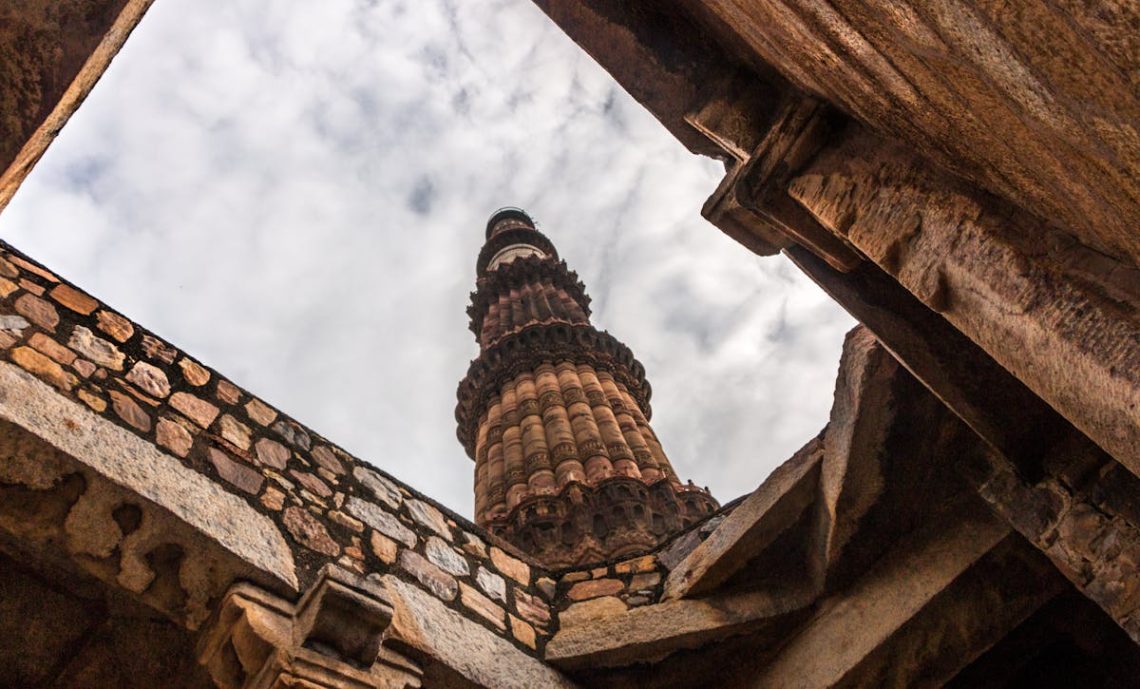
| Qutub Minar | Early Indo-Islamic style |
| Hauz Khas | Education, water systems and medieval planning |
| Humayun’s Tomb | Persian garden-tomb tradition |
| Shahjahanabad (Old Delhi) | Mughal style city-life and markets |
| Lutyens’ Delhi | British imperial planning |
| Metro-connected Delhi | 21st century identity |
You can walk through Delhi and experience architecture from 900+ years without leaving the city limits.
Markets That Tell Stories
Delhi’s famous markets did not appear suddenly.
They evolved through trade networks, religion, festivals and migration patterns.
- Chandni Chowk was designed during Shah Jahan’s rule as a royal street lined with shops.
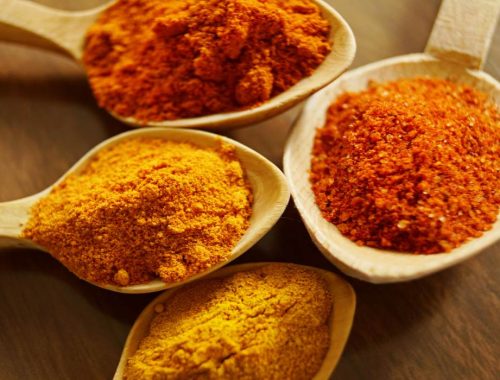
- Khari Baoli became Asia’s largest spice market through centuries of trade connections.
- Daryaganj became known for books, paper and intellectual exchange.
- Lajpat Nagar and Karol Bagh grew after Partition when families rebuilt businesses from scratch.
Markets are cultural records; not just shopping areas.
Food as Memory
Delhi’s food culture is one of its strongest identity markers.
It tells the story of:
- Mughal court kitchens
- Punjabi migration
- Afghan and Central Asian influences
- Street food innovation
Some signature food legacies:
| Food | Origin Story |
|---|---|
| Nihari and kebabs | Mughal royal kitchens |
| Chole bhature and parathas | Punjabi households |
| Chaat | A mix of Ayurvedic digestion ideas and royal taste |
| Kulfi, falooda | Persian influence |
Delhi’s food evolved through adaptation, not replacement.
Migration Shaped the City
Delhi has always been a city people move into, not out of.
Significant migration waves include:
- Medieval traders and scholars
- Mughal-era artists and craftsmen
- Refugees after the Partition
- Workers and students from across India post-1990s economic reforms
Every wave carried traditions, language, clothing, rituals, and food, building the Delhi we know today.
This is why Delhi belongs to everyone who arrives, not just those who were here before.
A City That Remembers
Delhi is one of the few cities where ruins remain part of daily life. Not as fenced museum objects, but as neighbours.
A fort wall may stand behind a bus stop. A centuries-old stepwell may sit behind offices.
Delhi teaches that – History does not disappear. It becomes part of how people live.
Why Delhi Matters in India’s Cultural Story
Delhi represents:
- Diversity
- Exchange
- Adaptation
- Survival
- Memory
Understanding Delhi helps us understand how India’s culture formed – not through a single identity, but through many voices living together, sometimes peacefully, sometimes in conflict, always evolving.

Khushi Jha
I am Khushi Jha, a proud alumna of Delhi University with a degree in History and Political Science. My fascination with the events that have shaped our world drives me every day. Currently, I am pursuing my Master’s in History, diving even deeper into global dynamics and the incredible heritage of India. I firmly believe that India's rich heritage deserves wider recognition. I strive to bring its stories to the forefront, ensuring they are celebrated and acknowledged on a global stage. I have written extensively across various niches, including fashion, health, lifestyle, real estate, hospitality, amongst others. In my free time, you’ll find me immersed in books, both fiction and non-fiction, or simply enjoying some much-needed rest.

You May Also Like
Culture Ministry to Showcase India’s Heritage at Maha Kumbh with ‘Kalagram’
History of Indian Spices: A Journey Through Time