
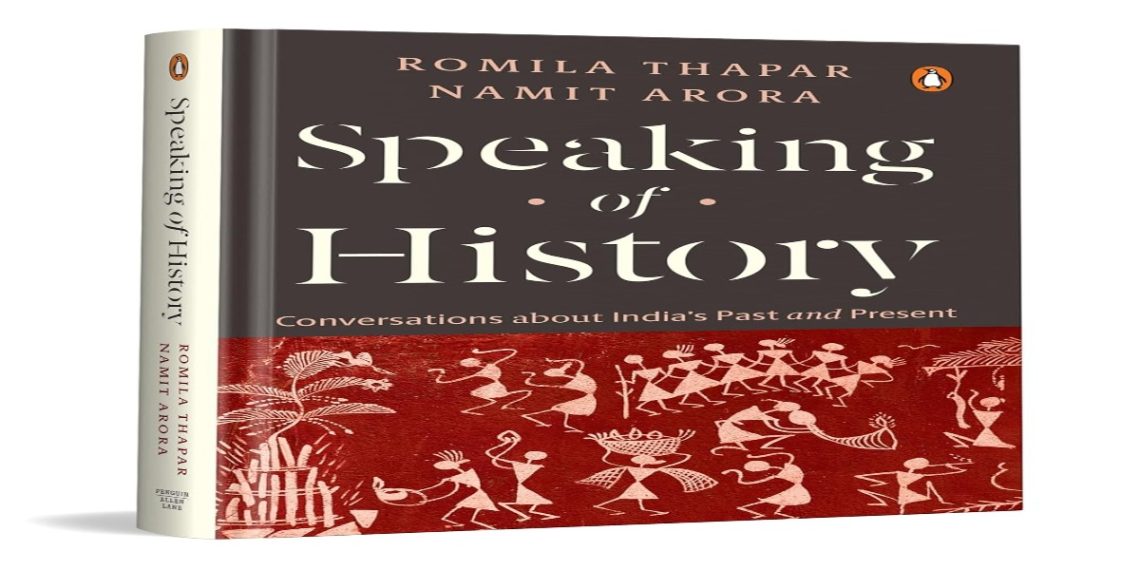
Speaking of History by Romila Thapar and Namit Arora: A Timely Conversation About India’s Past
Books about Indian history often tell stories of kings, dynasties, and battles. But Speaking of History offers something different. It presents a thoughtful conversation between historian Romila Thapar and writer Namit Arora, exploring how history is studied, remembered and debated in contemporary India.
A Brief Introduction to Romila Thapar
Romila Thapar is one of the most established voices in the field of Indian history, especially when it comes to ancient and early India. Her work is used widely in universities and has shaped how generations of students understand the country’s early past. Thapar’s approach focuses on evidence, multiple perspectives, and careful interpretation, rather than relying on assumptions or popular narratives.
What the Book Discusses
Speaking of History does not simply retell events. Instead, it looks closely at the process of writing history. Some key themes in the discussion include:
- How historians use sources and evidence
- Why interpretations of history change over time
- The role of public memory and textbooks
- How debates, disagreements, and new discoveries reshape understanding
The tone of the book is conversational, making complex ideas easier to approach without oversimplifying them.
Why the Book Feels Relevant Today
Public interest in Indian history has grown significantly in recent years. With that attention has come disagreement, reinterpretation, and sometimes conflict over what the past represents.
In this context, the book feels timely. It raises important questions about:
- How much influence present-day politics or emotion should have on historical interpretation
- Whether a single narrative can represent a diverse country like India
- How citizens, not just scholars, can engage with history more thoughtfully
Rather than offering a final answer, the book invites readers to reflect on these questions.
What Readers May Take Away
Readers may finish the book with a better understanding of how historical knowledge is built. A few underlying ideas stand out:
- Understanding the past often requires nuance and patience
- History benefits from questioning and discussion
- Multiple perspectives can coexist, especially in a country with India’s scale and diversity
Instead of expecting history to confirm what we already believe, the book encourages curiosity and openness.
Who This Book is For
Speaking of History will appeal to readers who want to go beyond textbook narratives and explore how history itself is shaped. It is suitable for students, general readers, and anyone interested in how India’s past connects to its present.
If you’re exploring Indian culture, society and heritage, this book offers a clear and thoughtful starting point. It does not try to settle debates. Instead, it encourages readers to understand history with care, evidence and context.
More such book explorations and cultural insights will follow here, as we continue exploring what shapes India beyond food, travel and surface-level identity.
(Featured image taken from Amazon)

Khushi Jha
I am Khushi Jha, a proud alumna of Delhi University with a degree in History and Political Science. My fascination with the events that have shaped our world drives me every day. Currently, I am pursuing my Master’s in History, diving even deeper into global dynamics and the incredible heritage of India. I firmly believe that India's rich heritage deserves wider recognition. I strive to bring its stories to the forefront, ensuring they are celebrated and acknowledged on a global stage. I have written extensively across various niches, including fashion, health, lifestyle, real estate, hospitality, amongst others. In my free time, you’ll find me immersed in books, both fiction and non-fiction, or simply enjoying some much-needed rest.


You May Also Like

The Evolution of Indian Architecture: From Ancient to Contemporary

Dwarka Under Study: New Excavations Aim to Reveal Hidden Past of Ancient City