
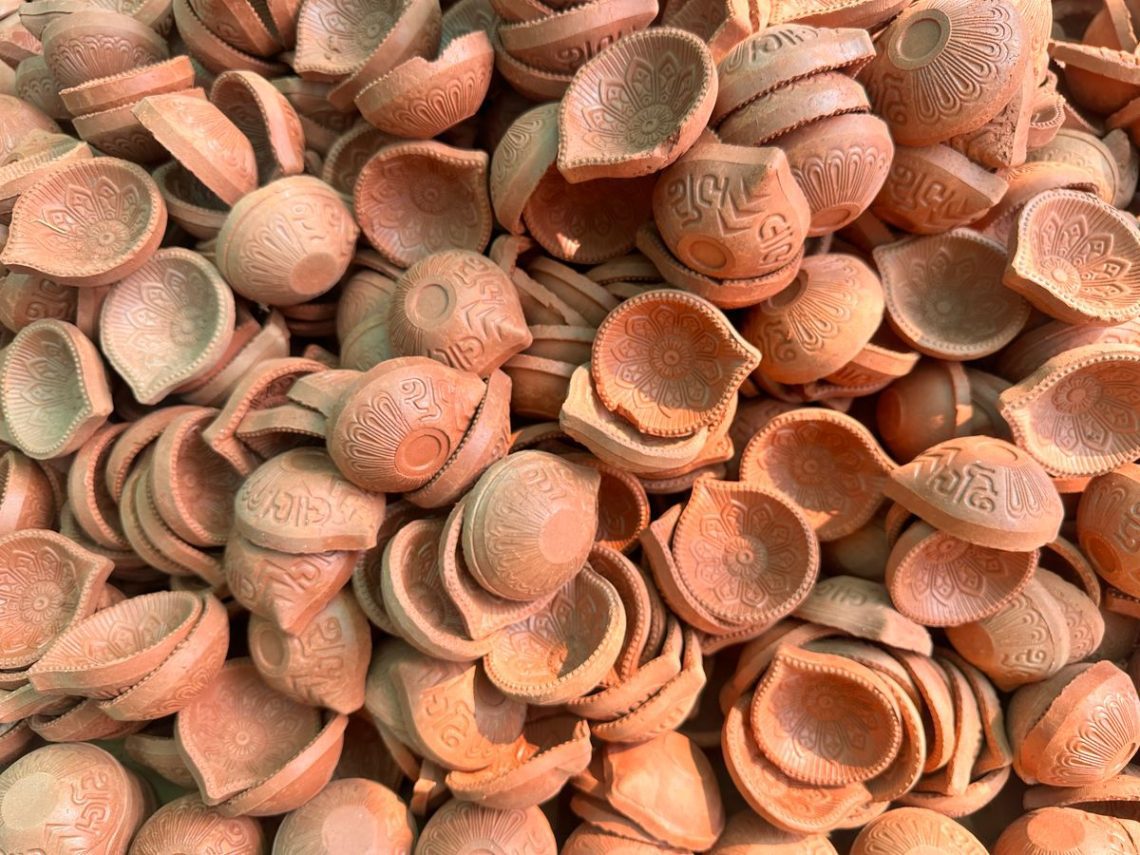
Traditional Clay Diyas Are Finding a Place in Diwali Markets Again: Meet the Potters Behind the Lamps
As Diwali approaches, rows of small clay lamps begin appearing in markets across India. Some are plain earthen diyas, while others are painted, decorated with patterns or shaped into elaborate designs. Behind these familiar festive objects are potter families who spend weeks preparing for the busiest season of their year.
In Chariya village in Assam’s Nalbari district, potters reportedly prepared more than 20 lakh earthen lamps ahead of Diwali 2026. A recent report also describes Jaipur’s Jaysinghpura potters increasing diya production in the weeks before the festival. These examples show how traditional pottery remains part of the preparations in different parts of the country.
More than a festive decoration
A clay diya is simple: shaped from earth, dried and fired, then used with oil or ghee and a cotton wick. Yet making thousands of them takes time and coordination. The clay must be prepared, each lamp shaped, dried properly and fired before it can reach a shop or market stall.
For many artisan families, Diwali demand is seasonal but important. Production often begins well before the festival because the lamps must be ready when shoppers start decorating their homes and preparing for Lakshmi Puja.
Handmade lamps face changing competition
Traditional potters now work alongside factory-made and machine-moulded lamps, as well as electric decorations. Machine-made products can offer uniform shapes and lower prices, while handmade diyas retain the variations that come from working with clay by hand.
The choice is not simply between old and new. Shoppers may use electric lights for balconies and entrances while still placing a few earthen lamps near a prayer space, doorway or rangoli.
A small purchase with a long craft tradition
Buying a locally made diya can support the potters and sellers who keep this craft going. If you are shopping this Diwali, look for lamps that are properly dried, have a stable base and can hold oil safely. Ask local sellers where the lamps were made; a market purchase can also be a chance to learn about the people behind the craft.
As homes light up on November 8, each clay lamp will carry a little more than a flame: it will also reflect the work of the artisans who made it.

Khushi Jha
I am Khushi Jha, a proud alumna of Delhi University with a degree in History and Political Science. My fascination with the events that have shaped our world drives me every day. Currently, I am pursuing my Master’s in History, diving even deeper into global dynamics and the incredible heritage of India. I firmly believe that India's rich heritage deserves wider recognition. I strive to bring its stories to the forefront, ensuring they are celebrated and acknowledged on a global stage. I have written extensively across various niches, including fashion, health, lifestyle, real estate, hospitality, amongst others. In my free time, you’ll find me immersed in books, both fiction and non-fiction, or simply enjoying some much-needed rest.


You May Also Like

Yuva Dasara Festival 2025 in Mysuru: Date, Events, Celebrities, and All You Need to Know

Join ‘Dekho Apna Desh, People’s Choice 2024’: Vote for Your Favorite Tourist Spots and Shape the Future of Indian Tourism!
